
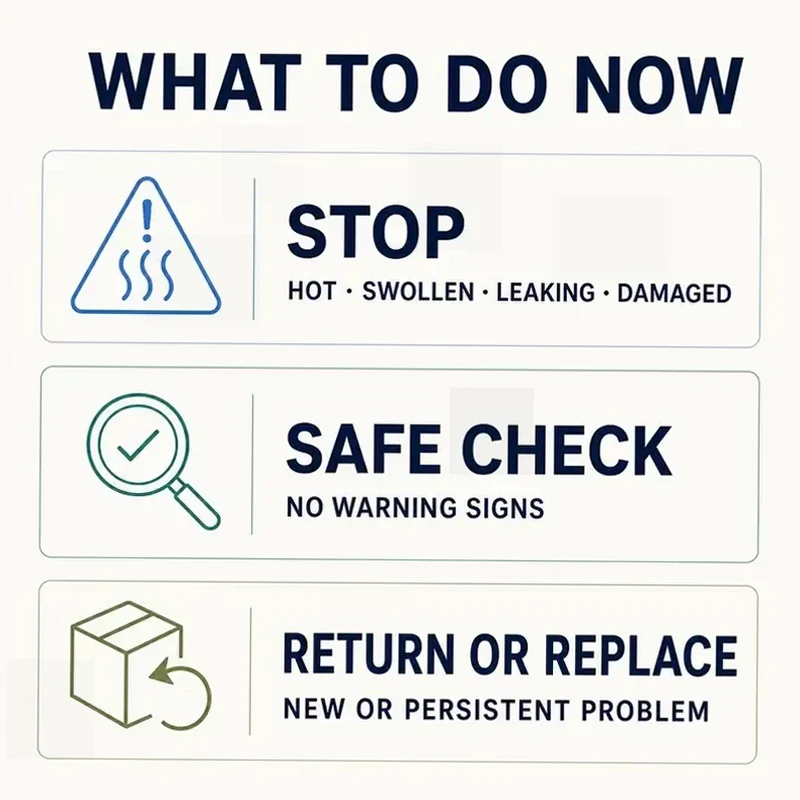
A burnt taste usually means the heating area ran short on e-liquid — but taste alone never identifies the internal culprit. Warning signs come first. Hot, swollen, leaking, visibly damaged or strange-smelling device? Stop using it — and no charging, opening, piercing or modifying either.
No warning signs? Then a short list of non-invasive checks is fair game. A brand-new device tasting burnt, or any device stuck in a burnt-taste loop, belongs on the return/replacement path — never on the workbench.
Last reviewed: August 8, 2026. This troubleshooting guide is for sealed disposable vapes used by adults aged 21+. It cannot diagnose a specific device remotely.
What should you do right now?
| What you're seeing | Do this | Not this |
|---|---|---|
| Hot, swollen, leaking, visibly damaged, abnormal odor | Stop. Away from heat, follow the seller's or manufacturer's handling instructions. | No charging, no further testing, no opening, piercing or modifying. |
| No warning signs; taste showed up after several back-to-back puffs | Set it aside upright, follow the device instructions. If retrying: one shorter puff, stop if the taste returns. | No universal "recovery wait time," no chain-puffing to push through it. |
| New device, or burnt taste surviving the low-risk checks | Stop using it; take the seller/manufacturer return or replacement route. | No opening or refilling a sealed disposable. |
Why does a disposable turn burnt?
Inside, a heating element and wicking material team up to move e-liquid into the hot zone. When the wick can't keep liquid at the coil at firing time, the draw turns dry, harsh and burnt.
Two general mechanisms carry manufacturer support:
- Running low on liquid: near end-of-life, the wick may stop staying reliably wet.
- Re-saturation falling behind: rapid repeated draws can outrun the wick's absorption pace.
Possibilities — not a verdict. A burnt taste proves no air bubble, no flavor-specific residue, no permanently killed wick.
Which checks are safe on a sealed device?
- Pause and eyeball the exterior. Heat, swelling, leaks, cracks, exposed internals, odd smell — all checked before anything else.
- Read visible liquid only through a window the device actually provides. Never open it to inspect the wick or tank.
- Stand it upright and follow its instructions. No single wait time governs every model.
- If clear of warnings and you resume: one shorter puff. Burnt taste back? Stop — don't test it into the ground.
- Persisting problem = return path. Sealed disposables have no user-replaceable coil and no internal repair lane.
Guidance from Vuse and IQOS backs low liquid and lagging wick re-saturation as general causes — without blessing any exact recovery time or diagnosing your unit.
When stopping beats troubleshooting
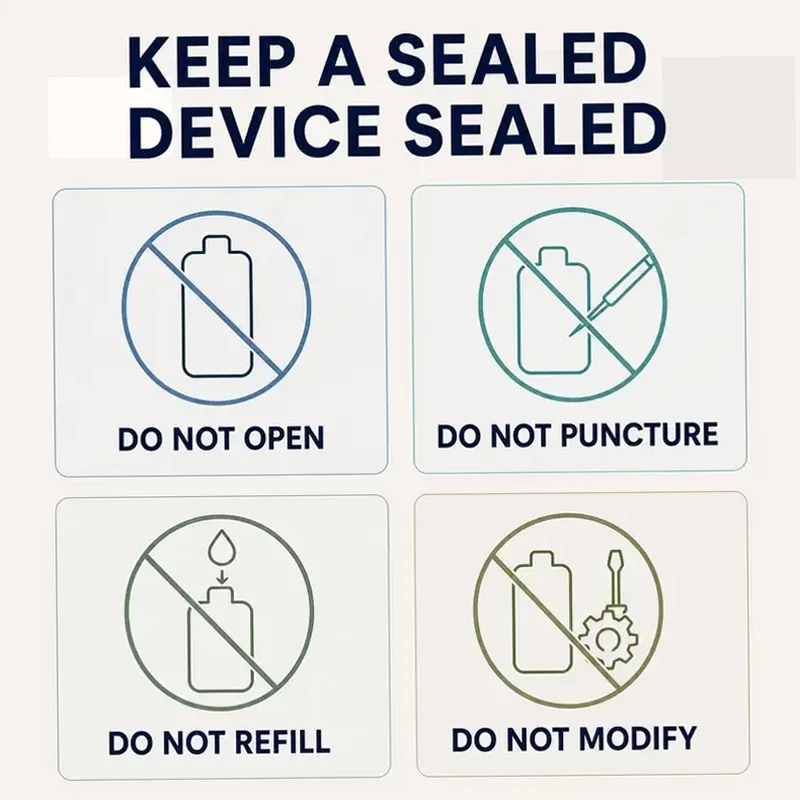
Immediate stop: overheating, swelling, leaking, visible damage, abnormal odor. Charging is not a "fix" for burnt taste. And a damaged device never rides in a pocket or bag where it can be crushed or touch metal.
FDA battery-safety guidance: manufacturer-recommended charging gear only, devices and batteries kept clear of temperature extremes. For a sealed disposable showing warning signs, the safe move is stopping — never internal heroics.
Brand-new device tasting burnt?
Don't blame yourself, and don't diagnose internals from flavor. Present from the first draws and surviving the non-invasive checks? Stop using it and document: product, package, order, visible condition.
Then Vapmo's Return and Shipping Policy or contact the support team. Keep device and packaging on hand unless the handling instructions say otherwise.
Can it actually be fixed?
A transient taste from lagging re-saturation may settle after the device rests and you resume with a shorter draw. A persistent burnt taste in a sealed disposable is not a user-repair job: stop, and move to return, replacement or proper disposal.
No opening the housing, no piercing the battery, no bypassing safety features, no adding liquid to a sealed tank, no internal coil swaps.
Should a defective unit be reported?
Seller or manufacturer first for the order-level remedy. The FDA also accepts reports on damaged or defective e-cigarettes — leaking, overheating, abnormal smell or taste — via its tobacco product problem-reporting process.
A report guarantees no refund, replacement or recall — it hands product and event data to the regulator.
The bottom line
Let observable warning signs — not coil theories — run the decision. Heat, swelling, leaks, damage, odd smell: stop now. No warnings: non-invasive checks only, with no faith in magic wait times. New or persistently burnt sealed device: return or replace it.
If replacement is the right outcome, browse currently available disposable vapes after the return or support step is done.
Adult-use notice: This guide is for adults aged 21+. Nicotine is addictive. It is not medical advice and does not establish that an e-cigarette is safe or risk-free.